
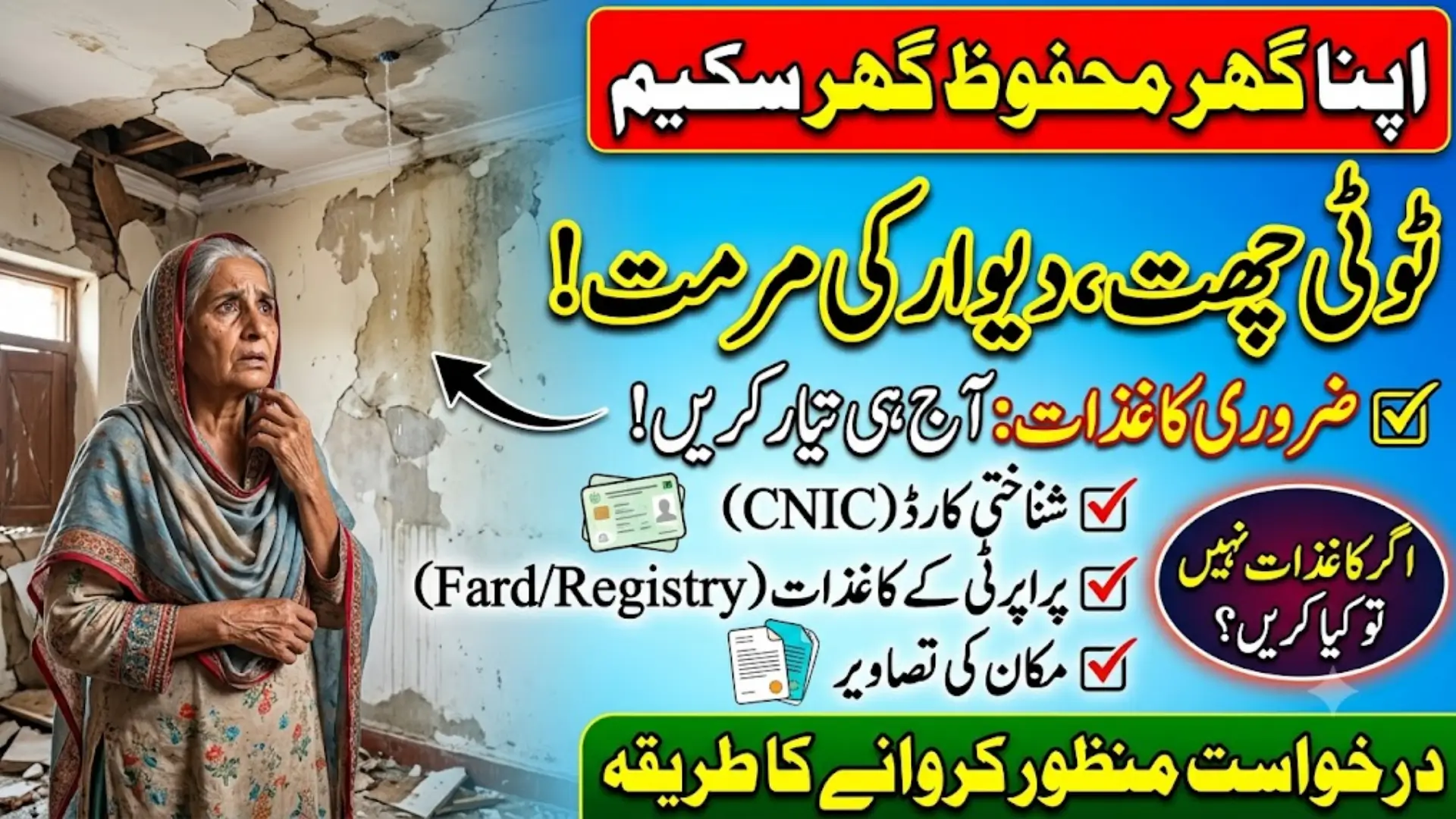
Apna Ghar Mehfooz Ghar Required Documents 2026 Complete List for Online Registration
Apna Ghar Mehfooz Ghar Required Documents
Apna Ghar Mehfooz Ghar Required Documents For families living under cracked roofs or in houses that badly need repair, arranging money for construction work can be difficult. This is why the Apna Ghar Mehfooz Ghar Program 2026 has drawn attention across Punjab, especially among low-income households hoping to repair unsafe homes.
The biggest question right now is about paperwork. While the final scheme-specific document checklist has not yet been fully published, applicants can prepare their basic identity, property and house-related records in advance. Doing this early can save time once detailed registration instructions are announced.
You Can Also Read: Apna Ghar Mehfooz Ghar Online Apply 2026
Which Documents Should You Prepare?
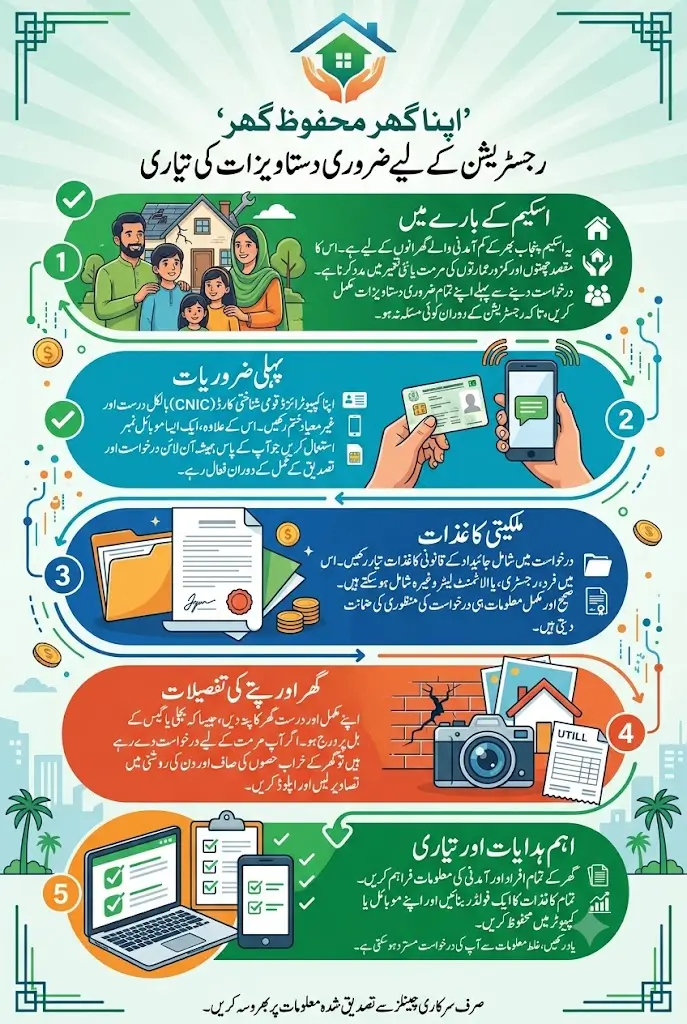
Applicants should keep a valid CNIC, active mobile number, property records and complete house address ready. Those seeking support for a damaged roof or unsafe structure may also need photographs showing the actual condition of the property.
A utility bill, household information or income details may also be requested during registration or verification. However, these should be treated as possible requirements until the Punjab government issues the final official checklist.
| Document or Information | Why It May Be Needed |
|---|---|
| Valid CNIC | Identity verification |
| Active Mobile Number | Application updates and possible OTP verification |
| Property Documents | Ownership or property connection verification |
| Complete House Address | Identification of the property |
| House Photographs | Evidence of damage or unsafe conditions |
| Utility Bill | Possible address verification |
| Household and Income Details | Possible eligibility assessment |
| Additional Documents | May be requested during verification |
Start With a Valid CNIC and Active Mobile Number
A valid Computerised National Identity Card is likely to be one of the most important requirements. Applicants should check the expiry date and make sure that the name and CNIC number entered in the application exactly match the card.
It is also better to keep clear front and back images of the CNIC ready. Anyone with an expired card should consider renewing it before applying because an invalid document may create problems during verification.
Applicants should also use an active mobile number that they can keep throughout the application process. Registration updates, verification messages or OTP codes may be sent to this number, so entering a wrong or inactive number can cause unnecessary delays.
You Can Also Read: Apna Ghar Mehfooz Ghar Loan 2026
Keep Your Property Records Ready
Property documents may be important for applicants seeking financial support for house repair, construction or expansion. The exact paper required can vary because different properties have different ownership records.
Applicants should therefore gather whatever genuine documents they already have, such as a Fard, registry, allotment letter or another legal property record. The final guidelines will clarify which documents are accepted for each application category.
People should avoid submitting edited, false or unrelated papers. Government housing applications may go through document checks or physical verification, and incorrect information can lead to rejection.
Complete Address and Residence Details May Also Be Needed
Applicants should know the complete location of the property for which they are seeking assistance. This may include the district, tehsil, city, village, street and other details that help identify the house.
A recent electricity or gas bill may also be useful as supporting address evidence if the registration system asks for it. However, applicants should not assume that a utility bill is compulsory until this is clearly mentioned in the official instructions.
The most important thing is that the address entered in the application should be accurate and consistent with the available property records.
Take Clear Photos of the Damaged House
For people applying because of an unsafe roof, cracked walls or another serious structural problem, clear photographs may help show the actual condition of the house.
Professional photography is not needed. A mobile phone is enough, but the pictures should be taken in daylight and should clearly show the damaged area. It is useful to take one close-up photo and another wider image showing the surrounding structure.
Applicants should avoid blurry pictures, filters or heavy editing. Keeping the original photos saved on the phone is also a good idea in case they are requested again during verification.
Household and Income Information Could Be Part of Verification
Applicants may also be asked about their household and financial situation. This can include monthly income, employment status, number of family members and the current condition of the house.
Not every applicant has a salary slip or formal income certificate, especially those working in daily-wage or informal jobs. For this reason, the registration form may simply ask applicants to provide basic income and employment information.
Any information entered should be truthful. If additional income documents are required for a particular category, the official instructions should explain this during the application process.
What House Repair Applicants Should Prepare
Families seeking assistance specifically for a damaged roof, wall or unsafe part of their house should focus on proving three things: who they are, their connection with the property and the condition of the house.
In practical terms, this means keeping a valid CNIC, property records, complete address and clear photographs of the damaged areas ready. Supporting residence documents may also be useful if requested.
Because repair cases may require an assessment of the actual condition of the property, applicants should also be prepared for possible physical verification.
Documents for Construction or House Expansion
Those seeking support for construction or expansion may face a stronger focus on property ownership. Authorities may need to confirm that the applicant has a legal right to build on the property before financial assistance is approved.
Applicants in this category should therefore keep their CNIC, ownership records, complete property details and any available information about the proposed construction ready. Household and income details may also form part of the assessment.
The final paperwork can differ from repair cases, so applicants should follow the requirements shown for their specific category rather than assuming that every applicant needs the same documents.
How to Prepare Before Online Registration
It is better to organise important papers before the registration portal opens rather than searching for them at the last moment. Applicants can create one folder on their mobile phone or computer and save clear copies of their CNIC, property records and house photographs there.
Before submitting an application, check that the CNIC is valid, the mobile number is active and the spelling of names and addresses is correct. Property documents should be readable, and any photographs should clearly show the relevant details.
Applicants should also save a copy or screenshot of the final submitted application and any reference number they receive.
Avoid These Document Upload Mistakes
Even a genuine document can create problems if the uploaded copy is unclear. A cropped CNIC, blurry property paper or wrong file can delay verification.
Before pressing the submit button, make sure:
- The full document is visible and readable.
- Names and CNIC numbers match the application.
- The correct file has been uploaded.
- Property papers are complete.
- Photos are original and not heavily edited.
- No false information has been entered.
Taking a few extra minutes to review the form can prevent simple mistakes from affecting the application later.
Can You Apply Without a Fard or Complete Property Papers?
Many families live in houses where the ownership record is old, incomplete or available in a different form. Whether such applicants can qualify will depend on the final rules issued for Apna Ghar Mehfooz Ghar.
A Fard should not automatically be treated as the only acceptable property document unless the government clearly says so. A registry, allotment record or another legal document may also be relevant depending on the case.
Applicants who do not have complete records should gather whatever genuine documents they possess and wait for official clarification rather than submitting false papers.
Apna Ghar Mehfooz Ghar and Apni Chhat Apna Ghar May Not Require the Same Papers
Applicants should not assume that the document requirements for Apna Ghar Mehfooz Ghar will be exactly the same as those for Apni Chhat Apna Ghar.
The reason is simple: the purpose of each application may be different. Someone seeking a loan for new construction may need to prove plot ownership, while a family applying for repair assistance may also need to show that the existing house is damaged or unsafe.
The official registration instructions should therefore be followed according to the category under which a person is applying.
Where to Confirm the Final Document List
Applicants should rely on official Punjab government channels and the authorised registration portal for the final checklist. Social media posts and forwarded WhatsApp messages can easily contain outdated or incorrect information.
People should also be cautious of anyone asking for money in return for guaranteed approval. No private agent can promise that an application will be accepted because approval depends on the government’s eligibility and verification process.
Until the dedicated checklist is officially issued, applicants can safely prepare their CNIC, property records, mobile number, house details and supporting photographs.
Frequently Asked Questions
What documents are required for Apna Ghar Mehfooz Ghar registration?
Applicants should prepare a valid CNIC, active mobile number, property records and complete house details. Photographs of damaged areas and other supporting documents may also be requested depending on the application category.
Is a Fard compulsory for the house repair application?
The final rules have not yet confirmed that a Fard will be the only acceptable ownership document. Applicants should keep any genuine property records they have, including a registry or other legal ownership evidence.
Are damaged house photos required?
The final registration instructions will confirm this. However, applicants seeking repair assistance should keep clear photographs ready because they may help show the condition of the roof, walls or other damaged areas.
Is an electricity bill required?
A utility bill may be useful for address verification, but it should not be treated as compulsory unless the official application guidelines specifically ask for it.
Can someone apply without property ownership documents?
That will depend on the final eligibility and verification rules. Applicants without complete papers should gather any genuine ownership or occupancy records they have and wait for official guidance.
Can tenants apply for Apna Ghar Mehfooz Ghar?
The final eligibility rules will determine whether tenants can apply under any category. People who do not own the property should check the official conditions before submitting an application.
Conclusion
Applicants planning to apply for Apna Ghar Mehfooz Ghar 2026 should keep their CNIC, property records, active mobile number and house-related information ready. The final document requirements may change once detailed registration guidelines are released, so every applicant should verify the official checklist before applying.